
Bladder cancer is the tenth most common cancer worldwide, with more than half a million new cases each year, and it is the most expensive cancer to treat, costing more than $10 billion annually. The high cost is due to the fact that current imaging techniques cannot detect—and therefore surgically remove—bladder tumors smaller than 1 millimeter, especially when they are flat. Second, half of all bladder cancers are resistant to treatment. Because of these diagnostic and therapeutic limitations, approximately 200,000 patients each year—for many years following diagnosis—experience cancer recurrence and undergo multiple surgical and therapeutic procedures. Residual bladder cancer therefore has a profound impact on patients’ quality of life and on societal costs.
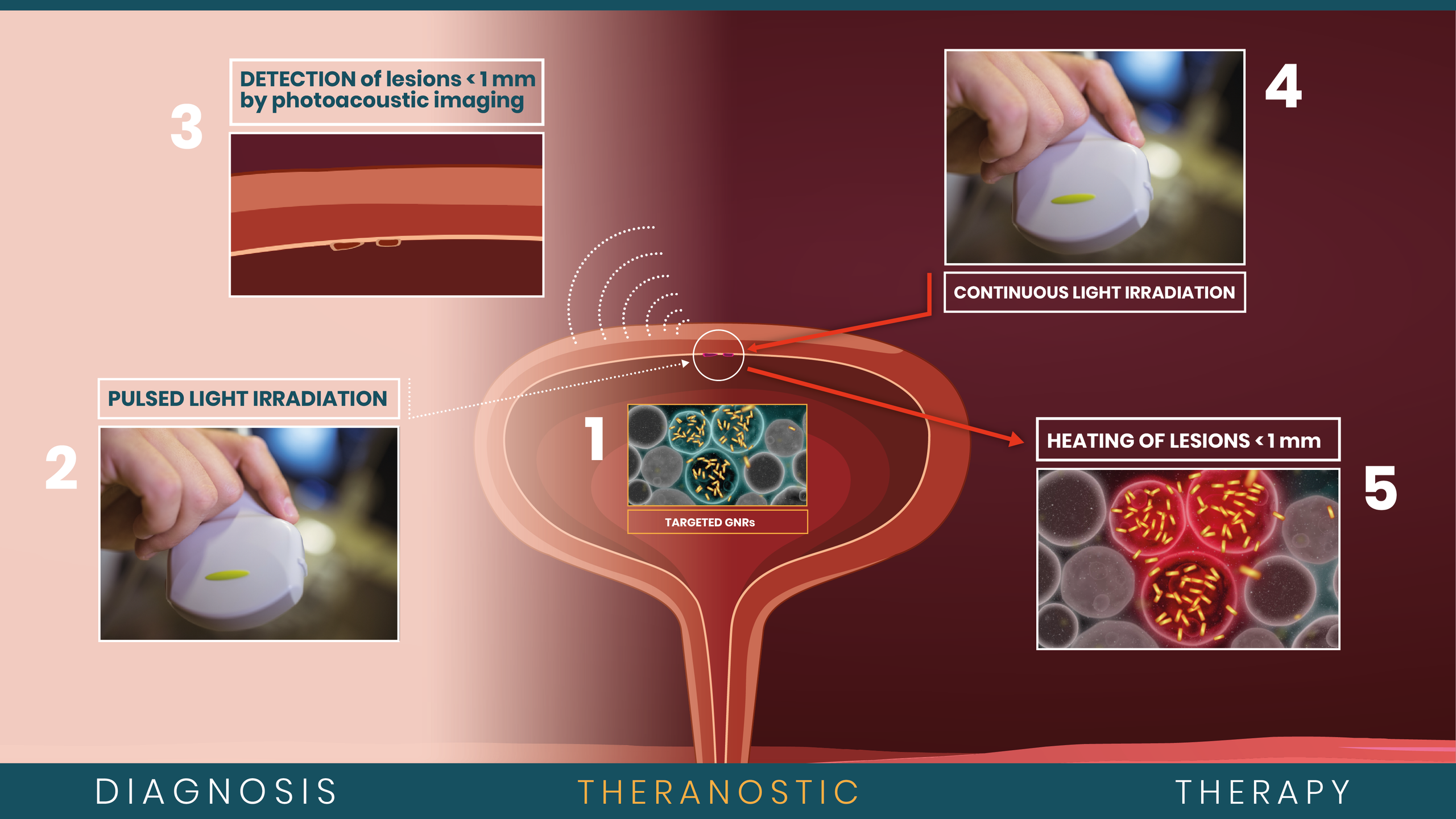
To find a solution for eliminating residual disease, our researchers are coordinating a European project that is validating a new approach to identify and remove even bladder tumors smaller than one millimeter. Together with researchers from the University of Bologna (Italy), Fujifilm (the Netherlands), Ascend Technologies (England), and META (Belgium), a solution has been developed that involves the use of a contrast agent composed of gold nanoparticles which, when instilled directly into the bladder, specifically recognize the tumor. When excited by laser light, the nanoparticles emit ultrasound waves that are detected by an ultrasound scanner. The combination of nanoparticles and the ultrasound scanner makes it possible to locate and visualize very small tumors that would otherwise remain in the bladder. This approach allows for the physical removal of the small tumor and is not susceptible to the development of resistance to chemotherapy or immunotherapy. Consequently, this approach is applicable to both men and women, including frail individuals who could not be treated withchemotherapy.¹
The innovative nature of this solution was recognized as having a significant impact by the European Commission’s Joint Research Center. In May 2025, the PHIRE project was also selected as one of the three most significant studies presented during EuropeanCancerWeek²–⁴ and was featured by TGCOM24⁵.
Our researchers are now working to bring this solution to the clinical stage, navigating the regulatory process for use in humans and raising new funds.
https://innovation-radar.ec.europa.eu/innovation/59536